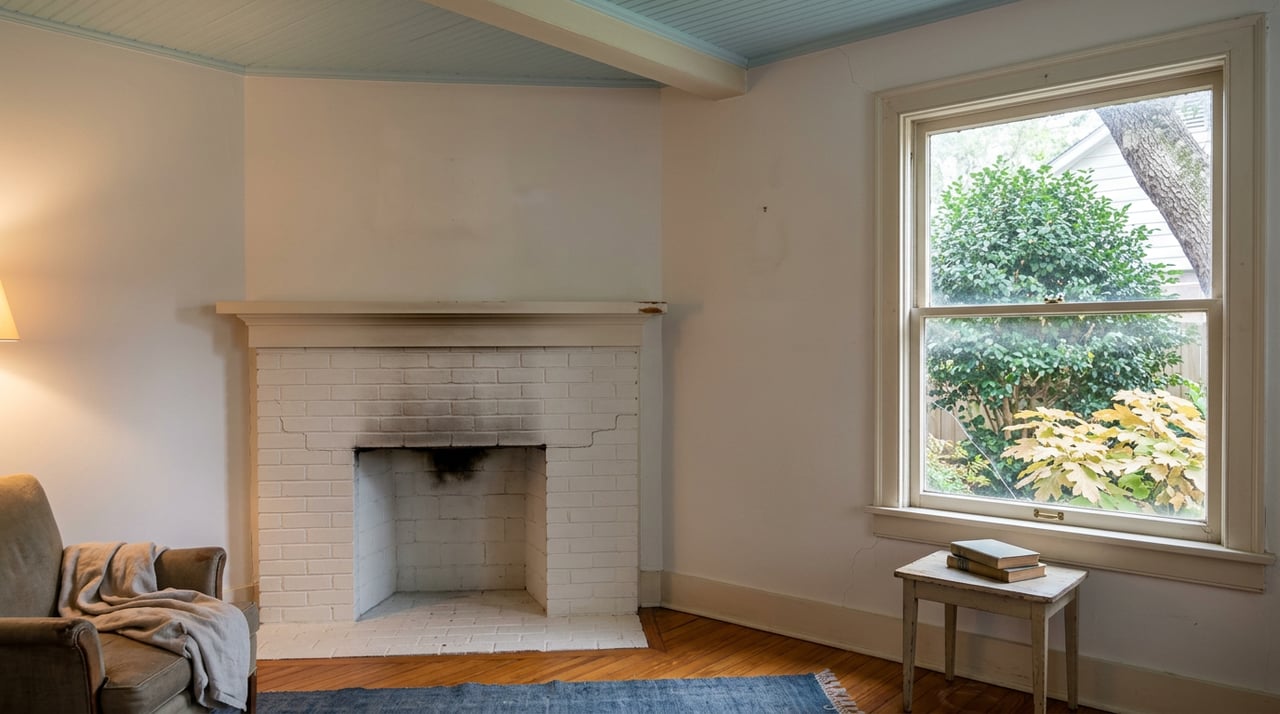
Scroll through active listings in The Cove this month and a pattern shows up fast. Homes are either finished, marketed with new wiring, updated plumbing, and a recently gut renovated kitchen, or they are frank fixer-uppers priced to reflect original 1940s bones and little else. The middle ground, a home with a new roof but a mid-century bathroom, or an updated kitchen sitting on original electrical, rarely stays listed for long enough to notice. Something is filtering that middle ground out before it ever becomes a listing photo.
It isn't the neighborhood's governance. Large sections of The Cove carry no strict homeowners association at all, which gives owners real freedom to choose finishes, additions, and floor plans without an architectural review board weighing in. That freedom is genuine and it's part of what draws buyers to a peninsula neighborhood built out mostly between the early 1900s and the 1950s, bordered by Massalina Bayou, Bunkers Cove, Watson Bayou, and Lake Van Vac, a short walk from McKenzie Park and the Panama City marina.
But that freedom runs into a harder limit the moment a renovation budget crosses a specific line, and that line comes from Bay County, not from any HOA board.
The Rule Sellers Already Know And Buyers Often Don't
Bay County's own permit requirements state that if the cost of any reconstruction, rehabilitation, addition, or other improvement to a building equals or exceeds 50% of that building's market value within a 10 year period, the work counts as a substantial improvement under National Flood Insurance Program standards. Cross that line and the existing structure has to meet the same requirements as new construction, which for a home in a mapped flood zone typically means raising the living area to or above base flood elevation.
The Cove's age works against buyers here in a specific way. A meaningful share of its housing stock, the original cottages and craftsman bungalows built long before modern floodplain mapping existed, sits inside zones where this rule applies. It isn't a rare edge case in this neighborhood. It's a background condition shaping nearly every renovation decision on nearly every older lot.
Why The Math Isn't As Simple As It Sounds
The threshold isn't calculated against what a buyer paid for the home or what it could sell for today. County reviewers work from an appraised value of the structure alone, with the land excluded. A buyer who closes at a price that reflects prime bay frontage, not just the house sitting on it, can end up with a structure valuation far lower than the purchase price suggests. That means the dollar ceiling on renovation spending is often smaller than the sale price would lead anyone to guess.
The clock doesn't reset with each new permit, either. Work gets tracked cumulatively. A new roof this year, updated electrical next year, and a kitchen gut the year after all stack against the same 10 year window. A homeowner who treats each project as its own isolated decision can cross the threshold without ever approving a single renovation that looked, on its own, like a major undertaking.
Two Paths Once You're In The Zone
| Stays under the threshold | Crosses the threshold | |
|---|---|---|
| Structure | Existing foundation and floor height remain as-is | Living area must be raised to or above base flood elevation |
| Systems | Electrical, HVAC, and plumbing can be repaired or replaced in place | Same systems typically must be relocated above flood elevation |
| Permitting | Contained to the approved scope | Full compliance review across the entire structure |
| Insurance | Existing elevation certificate and rating generally hold | A new elevation certificate is required and the premium is recalculated |
Crossing that line turns what started as a kitchen or bathroom remodel into a foundation-level project. That's exactly the kind of scope change a buyer planning a modest updates budget rarely prices in before closing.
Why So Many Cove Listings Show Up Already Finished
Sellers who complete renovations before listing keep control of both sides of this equation. They know the pre-renovation appraised value of their own structure, they can sequence permits to stay under the threshold on purpose, and they can document the finished work with a current elevation certificate before a buyer's lender ever asks for one.
A buyer who purchases a home planning to finish the work after closing inherits none of that visibility. They are starting the clock on someone else's structure without necessarily knowing how much of that 10 year window the previous owner already used.
This is also why fixer-uppers in the neighborhood tend to stay priced for their bones rather than their potential. A buyer who wants to gut a bungalow after closing has to budget for more than materials and labor. They need a structural appraisal and a clear read on whether that same scope of work will trigger elevation. It's a cost that never shows up on a contractor's estimate, but it shapes the offer price all the same.
The question worth asking before you write an offer on an older Cove home isn't just what will this cost to fix. It's how much of the county's ten year clock is already used, and how much room is actually left.
What To Ask For Before You Write An Offer
- Request the property's current elevation certificate, or confirm whether one exists on file with the county.
- Ask the seller directly for permit history on any electrical, plumbing, HVAC, or structural work completed in the past decade.
- Pull the appraised structure value from the county property appraiser rather than assuming the eventual sale price reflects it.
- If a major renovation is part of the plan, get a written cost estimate from a contractor before finalizing scope. The county's determination is based on estimated project cost, not the final invoice.
- Check the property's flood zone directly through FEMA's Flood Map Service Center before assuming its status based on a neighbor's home or an old map.
The City of Panama City has participated in the NFIP since 1992, which is part of why flood insurance is available here at all. That participation is also the reason the substantial improvement rule applies as strictly as it does. Communities that opt into affordable flood coverage accept these compliance rules as part of the bargain.
A Couple of Questions Worth Settling Early
Does closing on the home reset the ten year clock? No. The threshold tracks the structure's cumulative renovation history, not who owns it. A buyer who closes on a home that already had significant work done in the past several years can inherit less room under the threshold than the sale price suggests.
Does doing some of the work yourself lower the cost that counts toward the threshold? In most Florida jurisdictions enforcing this NFIP standard, the value assigned to labor is estimated at standard contractor rates regardless of who actually performs the work, so self-performed labor generally isn't discounted from the total. Materials are counted at their actual or estimated cost either way.
The Cove's appeal is real. The bay frontage, the mature oaks, the walk to downtown, and the freedom to shape a property without an architectural committee's approval are all part of what makes this one of Panama City's most distinctive neighborhoods to call home. None of that changes. What changes is how a buyer should read a fixer-upper's price tag, and how much runway actually exists between "needs updating" and "needs to be elevated."
If you're weighing an older home in The Cove and want a clearer read on what a specific property's renovation budget can actually support, Joshua Fowler can walk through the permit history, flood zone status, and structure valuation with you before you write an offer. Let's Connect.